Hollywood’s biggest shakeup
Hollywood’s Biggest Shake-Up: Warner Bros., HBO and Paramount Are About to Become One
Hollywood is about to look very different.
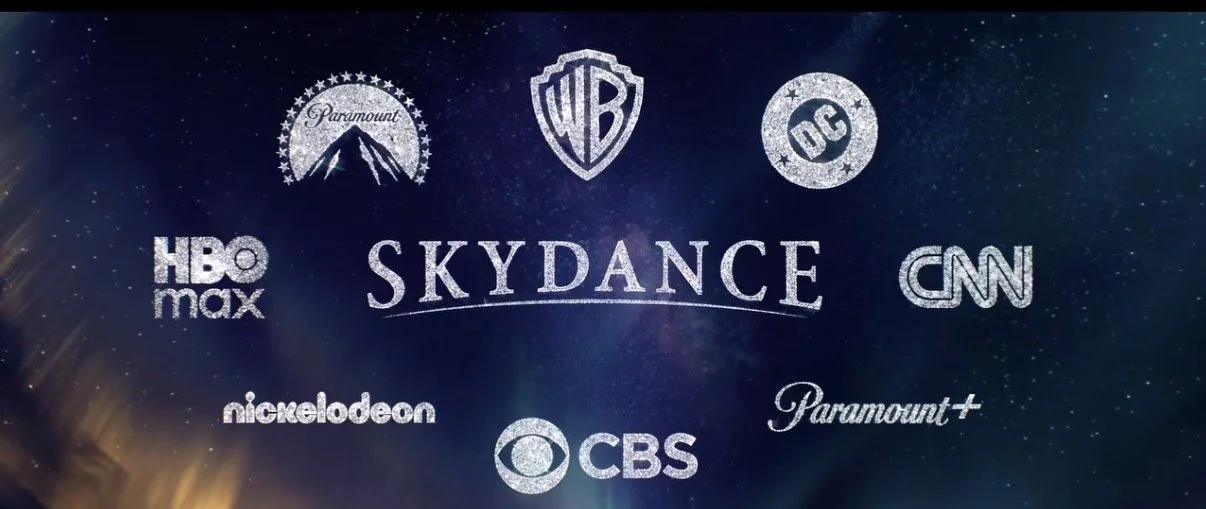
Paramount Skydance’s massive acquisition of Warner Bros. Discovery is expected to officially close on October 6, 2026, bringing some of the biggest names in entertainment — including Warner Bros., HBO, HBO Max, CNN, CBS, Paramount, Nickelodeon, MTV and Paramount+ — under one corporate roof. (Warner Bros. Discovery IR)
And that new entertainment empire has a name: Skydance.
CEO David Ellison announced that the combined company will become Skydance Corporation, while the historic Paramount and Warner Bros. names will continue to exist as individual studio brands. In other words, Warner Bros. isn’t disappearing, and neither is Paramount. Skydance will simply become the company sitting above them. (Reuters)
HBO Is Suddenly Part of a Much Bigger Empire
For television fans, HBO may be the most interesting piece of the entire deal.
The company behind Game of Thrones, The Last of Us, The White Lotus and decades of prestige television will now share ownership with CBS, Showtime, MTV, Nickelodeon and Paramount’s enormous television operation.
It also puts HBO Max and Paramount+ under the same owner.
Earlier this year, Ellison said the company planned to eventually combine the two streaming services. But more recent comments from HBO boss Casey Bloys have raised the possibility that the services could remain separate and instead be offered together as a bundle. For now, both brands are still being presented separately, meaning exactly what happens to HBO Max and Paramount+ remains one of the biggest unanswered questions after the merger. (The Washington Post)
The Amount of Content Under One Company Is Wild
Think about what Skydance will now control.
On the Warner side, there’s HBO, DC, Harry Potter, Game of Thrones, The Lord of the Rings, Warner Bros. Television, Cartoon Network, CNN, HGTV and Food Network.
On the Paramount side, there’s CBS, Paramount Pictures, Nickelodeon, MTV, Comedy Central, Showtime, Paramount+, Pluto TV, along with franchises including Mission: Impossible, Top Gun and Star Trek. (TechCrunch)
That gives one corporation an extraordinary amount of control over what audiences watch in theatres, on cable and through streaming.
Not Everyone Is Celebrating
The merger faced serious opposition.
A coalition of 12 U.S. states sued to block the transaction, arguing that combining the companies could reduce competition. The Writers Guild of America also challenged the merger.
Those fights have now been settled, and a federal judge approved the states’ agreement on September 30, clearing one of the final obstacles before the deal closes. (AP News)
The settlement does come with conditions. Among them, the combined company must maintain significant theatrical film production commitments over the next five years, including releasing at least 30 films annually during the first two years and 32 annually during the following three years. (SEC)
Welcome to the Skydance Era
The numbers behind this thing are enormous.
The transaction has been valued at roughly $110–111 billion including debt, and the combined company will be dealing with approximately $80 billion in debt while targeting billions in cost savings. (Reuters)
David Ellison will remain chairman and CEO, while outgoing Mattel CEO Ynon Kreiz joins him as co-CEO and will oversee much of the day-to-day integration of the two companies. (SEC)
For viewers, though, the corporate restructuring isn’t nearly as interesting as what comes next.
Does HBO maintain the identity that made it television’s prestige powerhouse? Do Paramount+ and HBO Max eventually become one giant streaming service? What happens when two enormous movie studios begin answering to the same executives? And how many jobs, shows and projects survive the promised cost cutting?
The Warner Bros. name isn’t going away. HBO isn’t going away. Paramount isn’t going away.
But beginning October 6, they’re expected to answer to the same empire.
Hollywood is entering the Skydance era.